













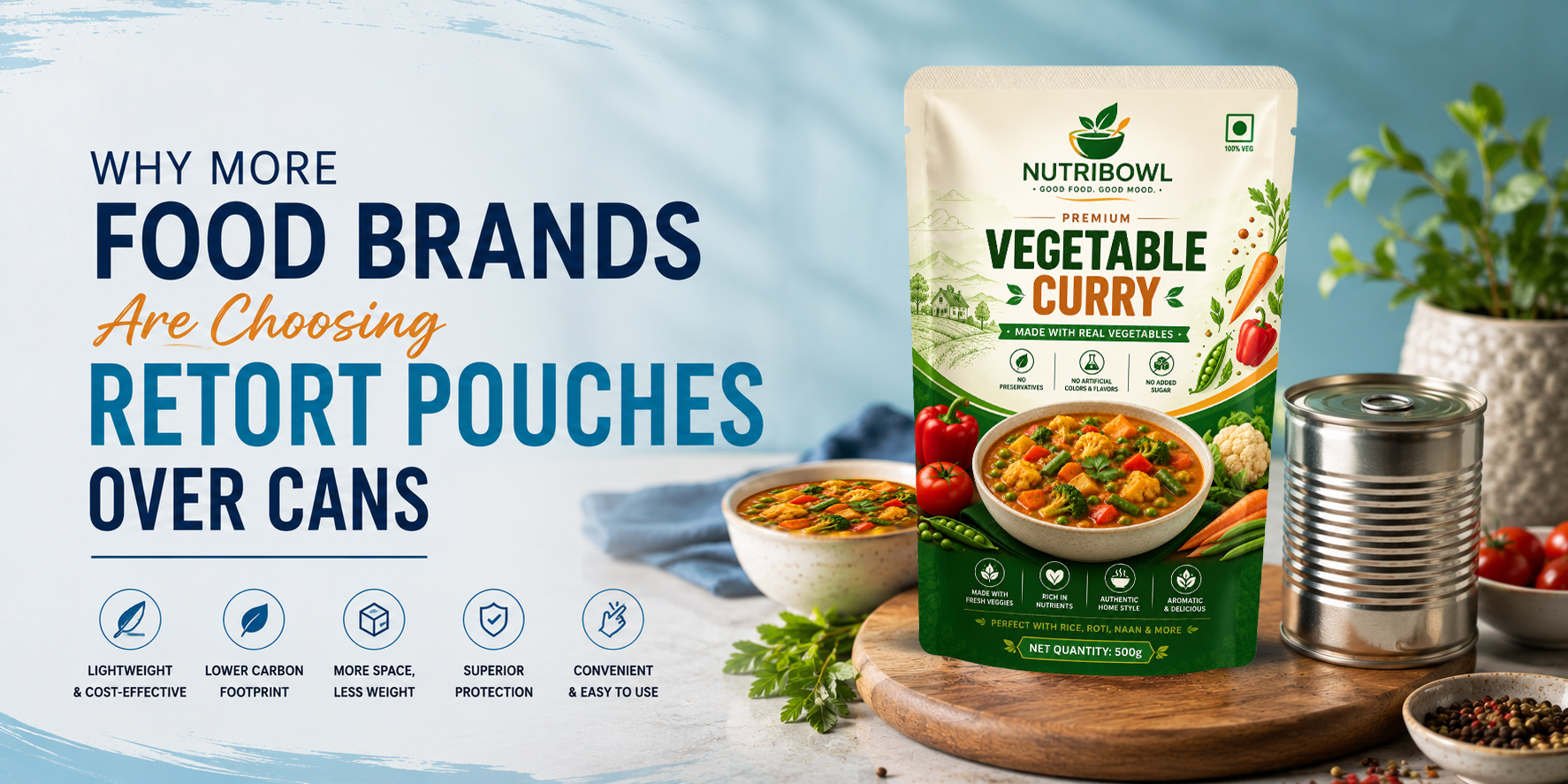
Not long ago, canned food dominated supermarket shelves. Today, many of those same products are available in retort pouches instead.
This shift isn’t simply about appearance. Food manufacturers are adopting retort pouches because they solve practical challenges across production, logistics, and consumer use.
While cans and glass containers continue to serve many applications, flexible retort packaging has become an attractive alternative for a growing range of products.
Less weight, easier transportation
One of the biggest advantages of retort pouches is their weight.
Compared with metal cans or glass jars, flexible pouches are significantly lighter. This helps reduce transportation costs and makes handling easier throughout the supply chain.
Because empty pouches are supplied flat, they also require much less warehouse space before filling, allowing manufacturers to store more packaging in the same area.
Convenience matters to consumers
Packaging plays an important role in the buying experience.
Many consumers prefer packaging that’s lightweight, easy to carry, and simple to open. Retort pouches also take up less space in kitchen cupboards and create less waste after use than rigid containers.
For busy lifestyles, those small conveniences often influence purchasing decisions.
Related: Discover our Retort Pouches for ready-to-eat meals, sauces, seafood, pet food, and other heat-processed products.
Faster heat transfer during processing
The thinner profile of a retort pouch allows heat to move through the package more efficiently during sterilisation.
This helps manufacturers process products more effectively while maintaining food safety requirements. The exact processing time depends on the product and production method, but packaging design plays an important role in overall efficiency.
Strong protection without bulky packaging
Despite being flexible, retort pouches are designed to provide excellent protection against moisture, oxygen, and external contamination when paired with the appropriate laminate structure.
This makes them suitable for products that require extended shelf life without relying on heavy, rigid packaging.
The key is choosing the right pouch construction for the specific application.
It’s not about replacing every can
Retort pouches aren’t intended to replace every packaging format.
Some products continue to perform well in cans or glass jars, depending on their processing requirements and market expectations.
The better question isn’t “Which packaging is best?”
It’s “Which packaging is best for this product?”
That approach usually leads to better long-term decisions than choosing a package based only on cost or appearance.
Final Thoughts
The growing popularity of retort pouches reflects changing consumer expectations and the food industry’s focus on efficiency.
For many manufacturers, the combination of lighter packaging, lower logistics costs, product protection, and consumer convenience makes retort pouches a practical choice for modern food packaging.
If you’re reviewing your current packaging, comparing the entire production and distribution process, not just the packaging price – can help determine whether retort pouches are the right fit for your product.
🔗 Suggested Internal Links
References
- Flexible Packaging Association (FPA)
- PMMI – The Association for Packaging and Processing Technologies
- ASTM International – Flexible Packaging Material Standards